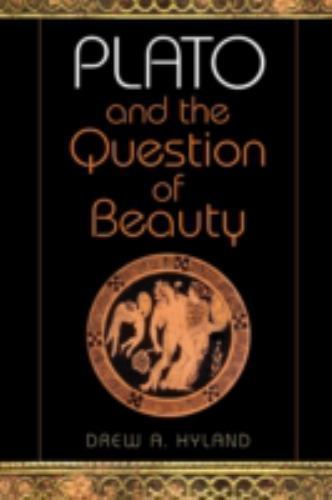
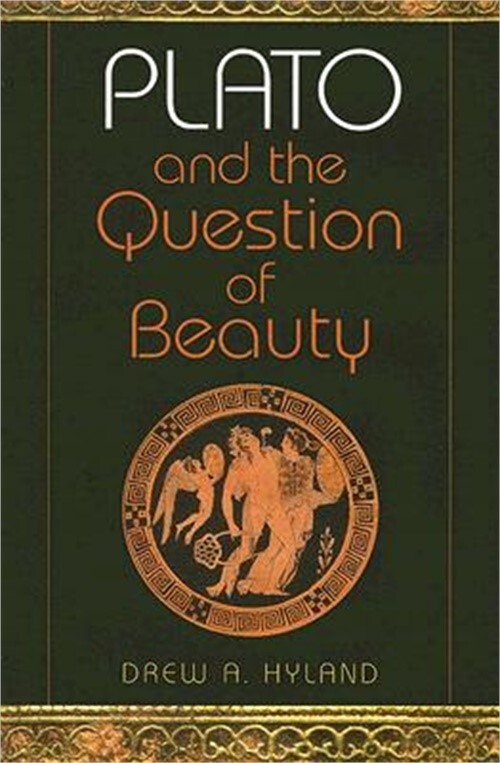
Plato on Beauty by Drew A Hyland 2008 Trade Paperback

$ 11.84

Item Length: 9.2 in Number of Pages: 168 Pages ISBN-13: 9780253219770 Reviews: "If beauty, as Hyland shows to be the case in the dialogues, is the phenomenon most suited to awaken and energize the philosophic eros of the soul, then not only are Plato's dialogues beautiful, but so too is Hyland's new book about the dialogues, and precisely because it so clearly reveals their beauty.... Hyland has brought the spirit of philosophy in the dialogues to life as few others have done -- and so given us a gift very much in the spirit of Plato's own." -- International Journal of the Classical Tradition, Vol. 17, No. 2, June 2010, "If beauty, as Hyland shows to be the case in the dialogues, is the phenomenon most suited to awaken and energize the philosophic eros of the soul, then not only are Plato's dialogues beautiful, but so too is Hyland's new book about the dialogues, and precisely because it so clearly reveals their beauty.... Hyland has brought the spirit of philosophy in the dialogues to life as few others have done-and so given us a gift very much in the spirit of Plato's own." -International Journal of the Classical Tradition, Vol. 17, No. 2, June 2010, If beauty, as Hyland shows to be the case in the dialogues, is the phenomenon most suited to awaken and energize the philosophic eros of the soul, then not only are Plato's dialogues beautiful, but so too is Hyland's new book about the dialogues, and precisely because it so clearly reveals their beauty. . . . Hyland has brought the spirit of philosophy in the dialogues to life as few others have done--and so given us a gift very much in the spirit of Plato's own. Vol. 17, No. 2, June 2010, A well written and forcefully argued exposition of one of the most important themes in Plato's philosophy., "A well written and forcefully argued exposition of one of the most important themes in Plato's philosophy." Walter Brogan, Villanova University, This book consists of five chapters, only three of which are directly concerned with "the question of beauty" (although no explanation is given of what "the question of beauty" might be). After a brief introduction, Smith (Trinity College) offers chapters on the question of beauty in t! he Hippias Major, the Symposium, and the Phaedrus, respectively. The next chapter discusses the Second and Seventh Letters, and their various expressions of philosophy as something lived, rather than consisting in doctrines or dogma. The final chapter focuses on the critique of rhetoric and writing in Phaedrus. No other works in which beauty is discussed receive sustained attention. Hyland emphasizes the ways in which Plato carefully embeds his discussions in an "existential situation," which includes not only characterization of the participants in the dialogue, but also some dramatically relevant aspect of their actual life circumstances. Written within the Continental tradition of Platonic scholarship, this book fails to engage with most of the considerable scholarship outside of that tradition on the works it does discuss; the entire bibliography of sources cited is only barely over a single page in length. Summing Up: Not recommended. --Choice N. D. Smith, Lewis and Clark College, January 2009, If beauty, as Hyland shows to be the case in the dialogues, is the phenomenon most suited to awaken and energize the philosophic eros of the soul, then not only are Plato's dialogues beautiful, but so too is Hyland's new book about the dialogues, and precisely because it so clearly reveals their beauty.... Hyland has brought the spirit of philosophy in the dialogues to life as few others have done-and so given us a gift very much in the spirit of Plato's own., "A well written and forcefully argued exposition of one of the most important themes in Plato's philosophy." -Walter Brogan, Villanova University, "A well written and forcefully argued exposition of one of the most important themes in Plato's philosophy." -- Walter Brogan, Villanova University, This book consists of five chapters, only three of which are directly concerned with "the question of beauty" (although no explanation is given of what "the question of beauty" might be). After a brief introduction, Smith (Trinity College) offers chapters on the question of beauty in t! he Hippias Major, the Symposium, and the Phaedrus, respectively. The next chapter discusses the Second and Seventh Letters, and their various expressions of philosophy as something lived, rather than consisting in doctrines or dogma. The final chapter focuses on the critique of rhetoric and writing in Phaedrus. No other works in which beauty is discussed receive sustained attention. Hyland emphasizes the ways in which Plato carefully embeds his discussions in an "existential situation," which includes not only characterization of the participants in the dialogue, but also some dramatically relevant aspect of their actual life circumstances. Written within the Continental tradition of Platonic scholarship, this book fails to engage with most of the considerable scholarship outside of that tradition on the works it does discuss; the entire bibliography of sources cited is only barely over a single page in length. Summing Up: Not recommended. --Choice N. D. Smith, Lewis and Clark College, January 2009--N. D. Smith, Lewis and Clark College (01/01/2009), "This book consists of five chapters, only three of which are directly concerned with "the question of beauty" (although no explanation is given of what "the question of beauty" might be). After a brief introduction, Smith (Trinity College) offers chapters on the question of beauty in t! he Hippias Major, the Symposium, and the Phaedrus, respectively. The next chapter discusses the Second and Seventh Letters, and their various expressions of philosophy as something lived, rather than consisting in doctrines or dogma. The final chapter focuses on the critique of rhetoric and writing in Phaedrus. No other works in which beauty is discussed receive sustained attention. Hyland emphasizes the ways in which Plato carefully embeds his discussions in an "existential situation," which includes not only characterization of the participants in the dialogue, but also some dramatically relevant aspect of their actual life circumstances. Written within the Continental tradition of Platonic scholarship, this book fails to engage with most of the considerable scholarship outside of that tradition on the works it does discuss; the entire bibliography of sources cited is only barely over a single page in length. Summing Up: Not recommended. --Choice"-- N. D. Smith, Lewis and Clark College, January 2009 "If beauty, as Hyland shows to be the case in the dialogues, is the phenomenon most suited to awaken and energize the philosophic eros of the soul, then not only are Plato's dialogues beautiful, but so too is Hyland's new book about the dialogues, and precisely because it so clearly reveals their beauty. . . . Hyland has brought the spirit of philosophy in the dialogues to life as few others have done--and so given us a gift very much in the spirit of Plato's own. Vol. 17, No. 2, June 2010"-- International Journal of the Classical Tradition "A well written and forcefully argued exposition of one of the most important themes in Plato's philosophy."--Walter Brogan, Villanova University Item Height: 0.4 in Grade From: College Graduate Student ISBN-10: 0253219779 Book Title: Plato and the Question of Beauty Item Weight: 9.2 Oz Author: Drew A. Hyland Illustrator: Yes Synopsis: This new reading of Plato provides a serious investigation into the meaning of beauty and places it at the very heart of philosophy., Drew A. Hyland, one of Continental philosophy's keenest interpreters of Plato, takes up the question of beauty in three Platonic dialogues, the Hippias Major, Symposium, and Phaedrus. What Plato meant by beauty is not easily characterized, and Hyland's close readings show that Plato ultimately gives up on the possibility of a definition. Plato's failure, however, tells us something important about beauty?that it cannot be reduced to logos. Exploring questions surrounding love, memory, and ideal form, Hyland draws out the connections between beauty, the possibility of philosophy, and philosophical living. This new reading of Plato provides a serious investigation into the meaning of beauty and places it at the very heart of philosophy., Drew A. Hyland, one of Continental philosophy's keenest interpreters of Plato, takes up the question of beauty in three Platonic dialogues, the Hippias Major, Symposium, and Phaedrus. What Plato meant by beauty is not easily characterized, and Hyland's close readings show that Plato ultimately gives up on the possibility of a definition. Plato's failure, however, tells us something important about beauty--that it cannot be reduced to logos. Exploring questions surrounding love, memory, and ideal form, Hyland draws out the connections between beauty, the possibility of philosophy, and philosophical living. This new reading of Plato provides a serious investigation into the meaning of beauty and places it at the very heart of philosophy. Intended Audience: Trade Format: Trade Paperback Topic: History & Surveys / Ancient & Classical, Aesthetics LC Classification Number: B398.A4H95 2008 Book Series: Studies in Continental Thought Ser. Language: English Item Width: 6.1 in Dewey Decimal: 111/.85092 LCCN: 2007-045005 Publication Year: 2008 Table Of Content: Preface and Acknowledgments Introduction 1. The Question of Beauty in the Hippias Major 2. The Question of Beauty in the Symposium 3. The Question of Beauty in the Phaedrus 4. The Second and Seventh Letters 5. The Critique of Rhetoric and Writing in the Phaedrus Notes Bibliography Index gtin13: 9780253219770 Dewey Edition: 22 Publisher: Indiana University Press brand: Indiana University Press Genre: Philosophy

Description

Plato and the Question of Beauty, Paperback by Hyland, Drew A., ISBN 0253219779, ISBN-13 9780253219770, Brand New, Free shipping in the US Drew A. Hyland, one of Continental philosophy's keenest interpreters of Plato, takes up the question of beauty in three Platonic dialogues, the Hippias Major, Symposium, and Phaedrus. What Plato meant by beauty is not easily characterized, and Hyland's close readings show that Plato ultimately gives up on the possibility of a definition. Plato's failure, however, tells us something important about beauty—that it cannot be reduced to logos. Exploring questions surrounding love, memory, and ideal form, Hyland draws out the connections between beauty, the possibility of philosophy, and philosophical living. This new reading of Plato provides a serious investigation into the meaning of beauty and places it at the very heart of philosophy.
  1. This book offers a fresh and insightful look at Plato’s exploration of beauty through three key dialogues. Hyland’s deep analysis reveals how Plato grapples with defining beauty, ultimately showing its elusive nature. Engaging and thought-provoking, it’s a must-read for anyone interested in philosophy or aesthetics. The clear writing makes complex ideas accessible, making it perfect for both scholars and casual readers. A brilliant examination of timeless questions!

    Louis Davide