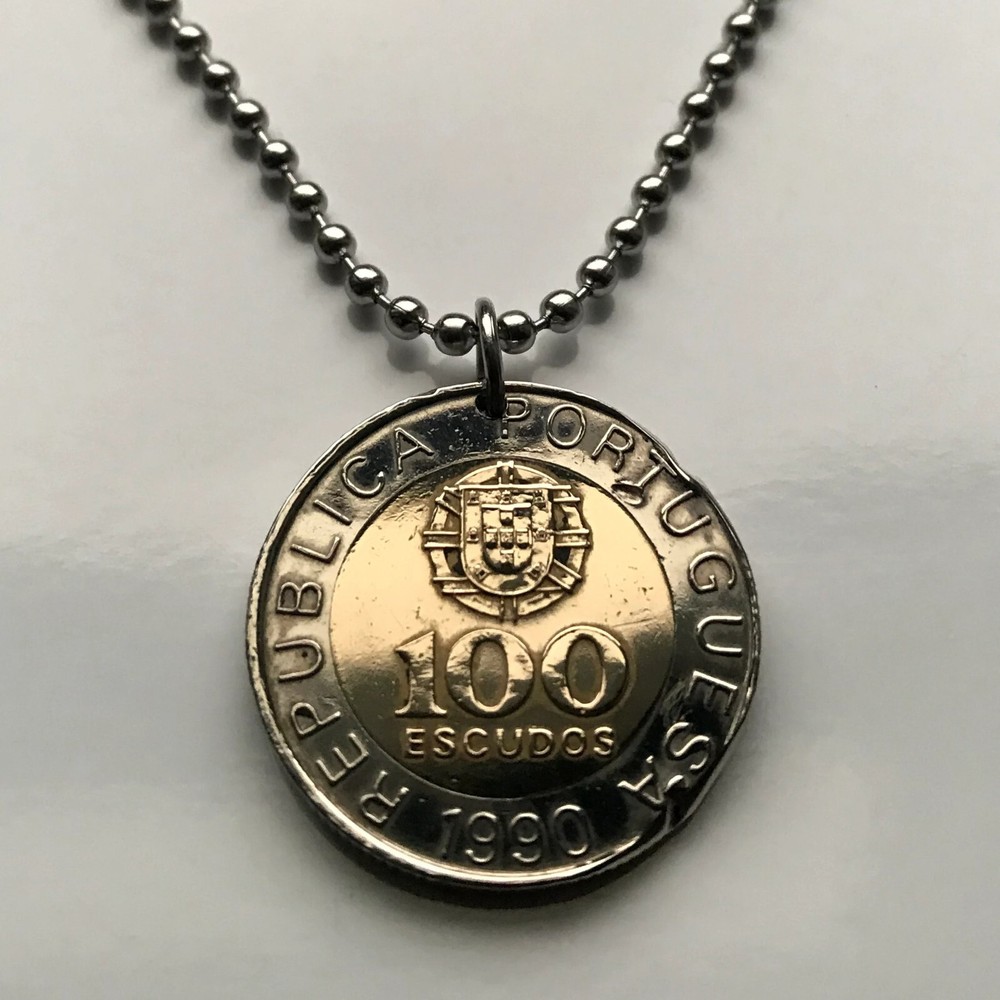
1990 Portugal 100 Escudos coin pendant Quinas castles Lisboa Porto Braga n002293
$ 8.98
Description
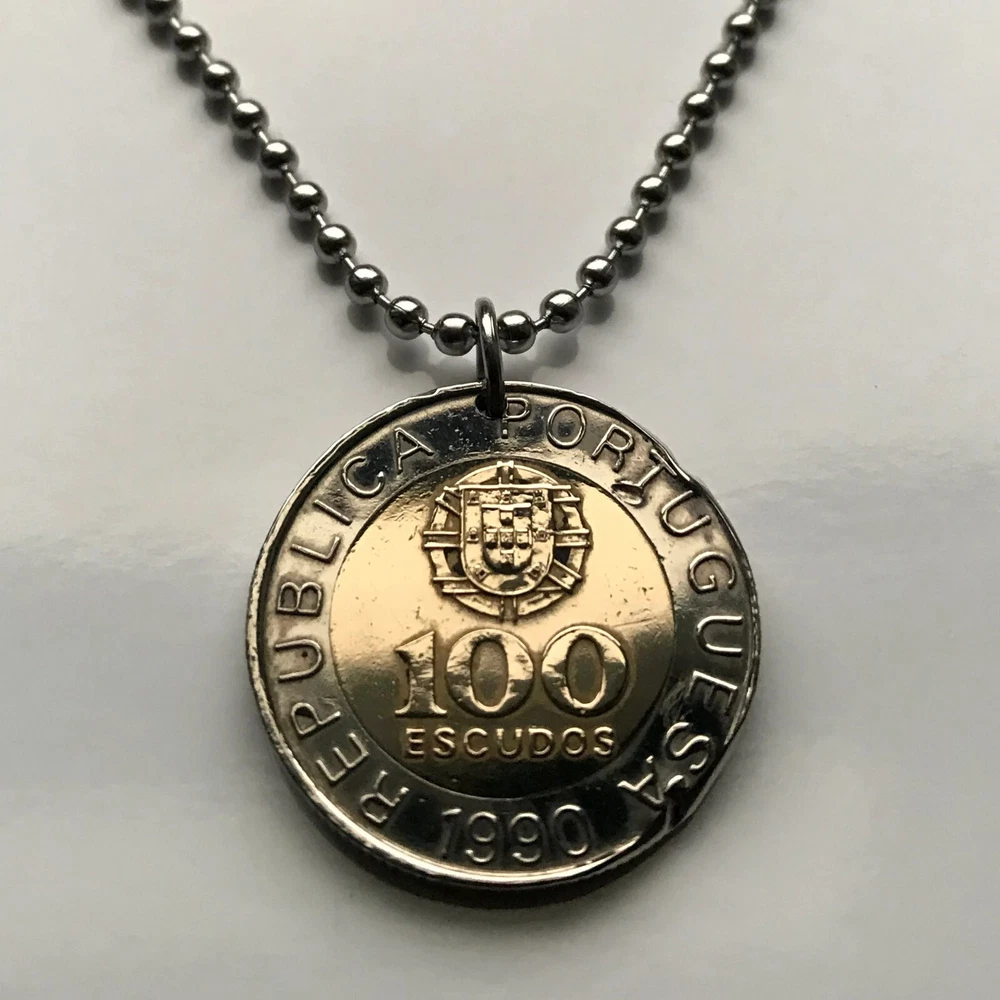
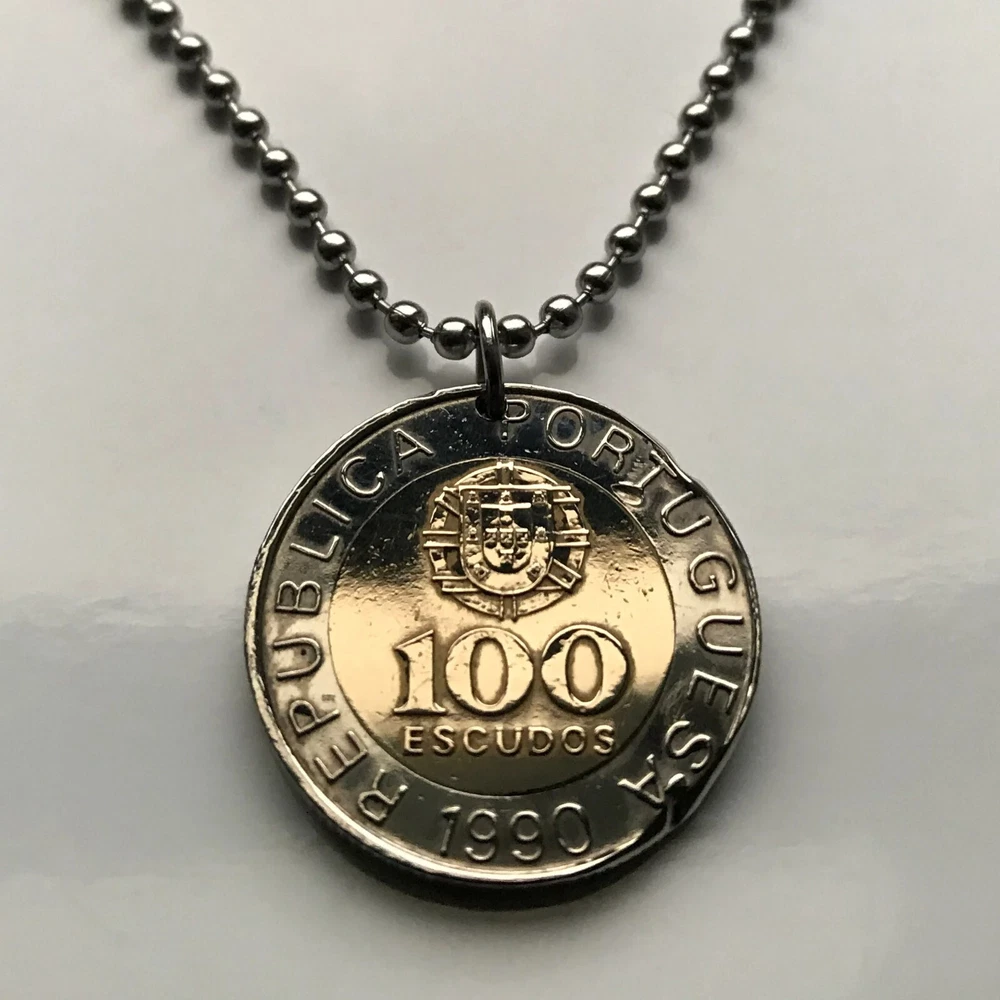
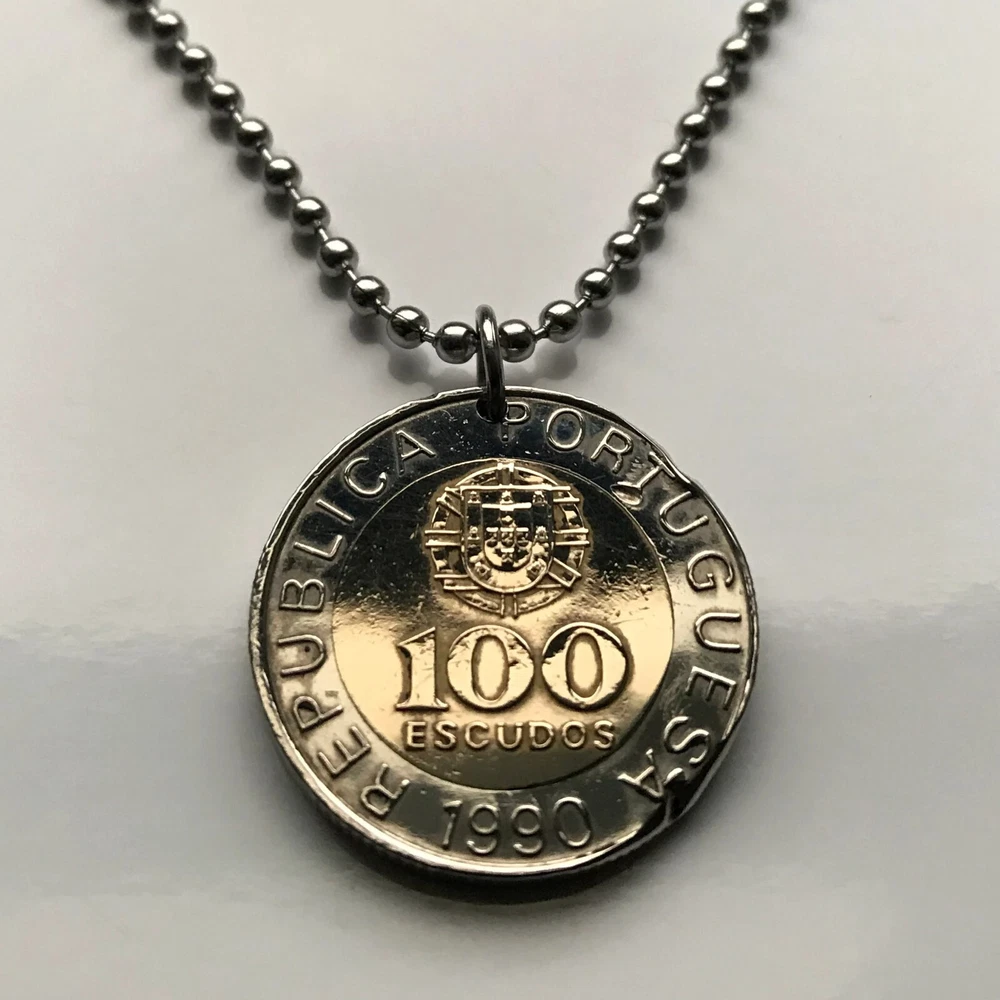
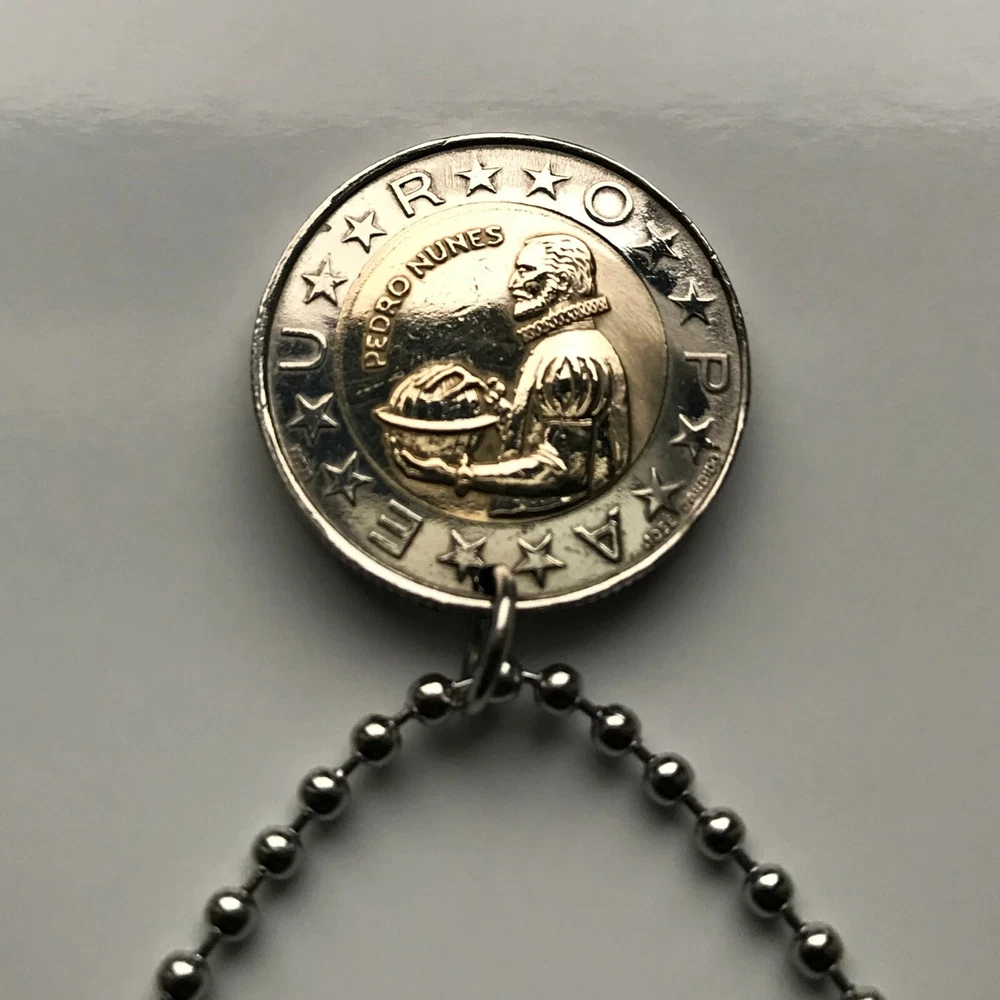
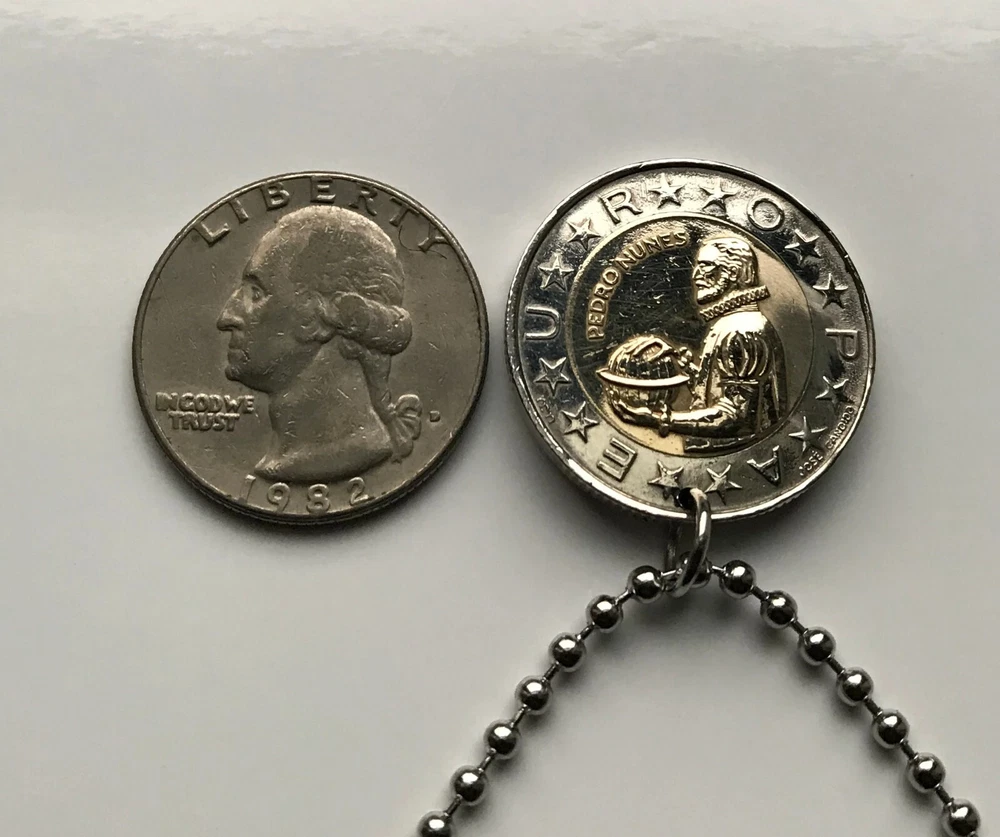
Portugal 100 Escudos {1989-2001} 2S FEATURING front: Coat of arms of Portugal {5 Quinas} After the official recognition of the Kingdom of Portugal as an independent country in 1143, 5 silver bezants were added to the blue cross of the shield, symbolising coins and the right of the monarch to issue currency. Late explanations interpret them as the five wounds of Jesus Christ, also a traditional legend explains that these escutcheons represent the five moor kings defeated by King Afonso I of Portugal in the battle of Ourique. From the fixation of the number of bezants in five, each of the escutcheons of the Portuguese shield became popularly referred as a quina (quincunx). By synecdoche, the term "Five Quinas" or simply the "Quinas" came to be used. The golden castles surrounding the quoins supposedly represent the Moorish castles conquered by the Kingdom of Portugal during the Reconquista. Their origin is probably Castilian. Lettering: REPUBLICA PORTUGUESA back: Pedro Nunes (1502-1578), a Portuguese mathematician, cosmographer, and professor Lettering: PEDRO NUNES E**U**R**O**P**A JOSÉ CANDIDO • quantity 1 • demonetized {no longer in circulation} polished Bi-metallic coin Aluminium-bronze center in Copper-nickel ring • diameter: 25.5 mm • weight: 8.3 g • comes with a 24" stainless steel ball chain Portugal coin pendant necklace fashion jewelry Portuguese Quinas castles Lisbon Porto Sintra Braga Coimbra Évora Faro Santa Maria de Belém Aveiro Ourique Mirandese Iberia Castilian Vila Nova de Gaia Ponta Delgada Guimarães Lagos Fatima Algarve Praia da Marinha Pedro Nunes